The Craft Behind the Cloth
Every piece that leaves our designers' hands carries years of skill, hours of care, and an understanding of fabric that can't be rushed. Here's what goes into making something you'll feel beautiful in.
Materials
It Starts with the Fabric
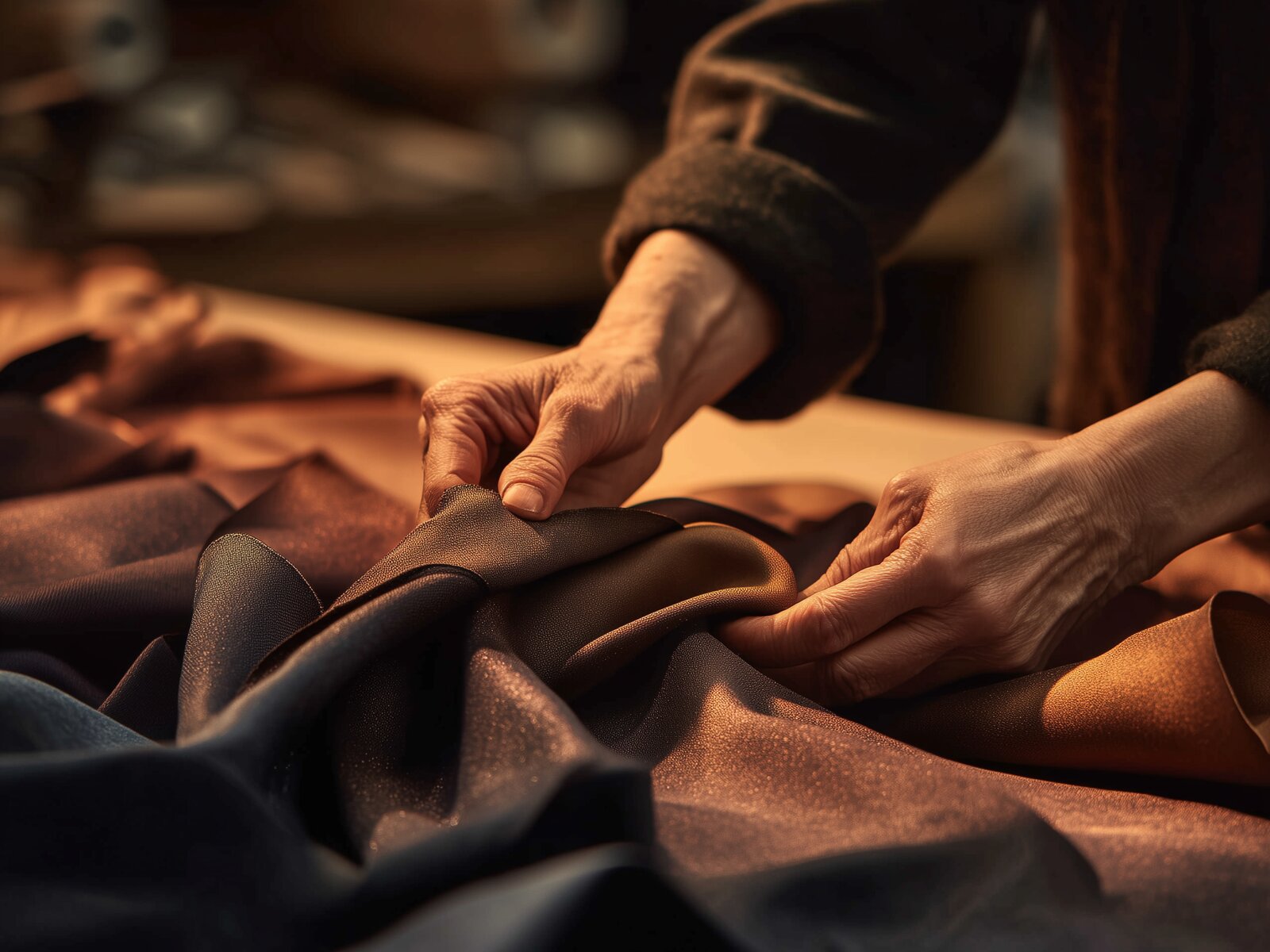
A garment is only as good as what it's made from. Our designers source fabrics for how they feel against skin, how they move with your body, and how they hold up over time. For swimwear, that means fabrics with high LYCRA content for recovery — so the suit snaps back to shape after every wear, every wash, every dive.
You can feel the difference in fabric that's chosen well. It doesn't pill after three wears. The color doesn't fade in chlorine. The elastic doesn't give out by August. Our designers choose fabrics that last seasons, not weekends.
Precision
When Flowers Must Meet at the Seam
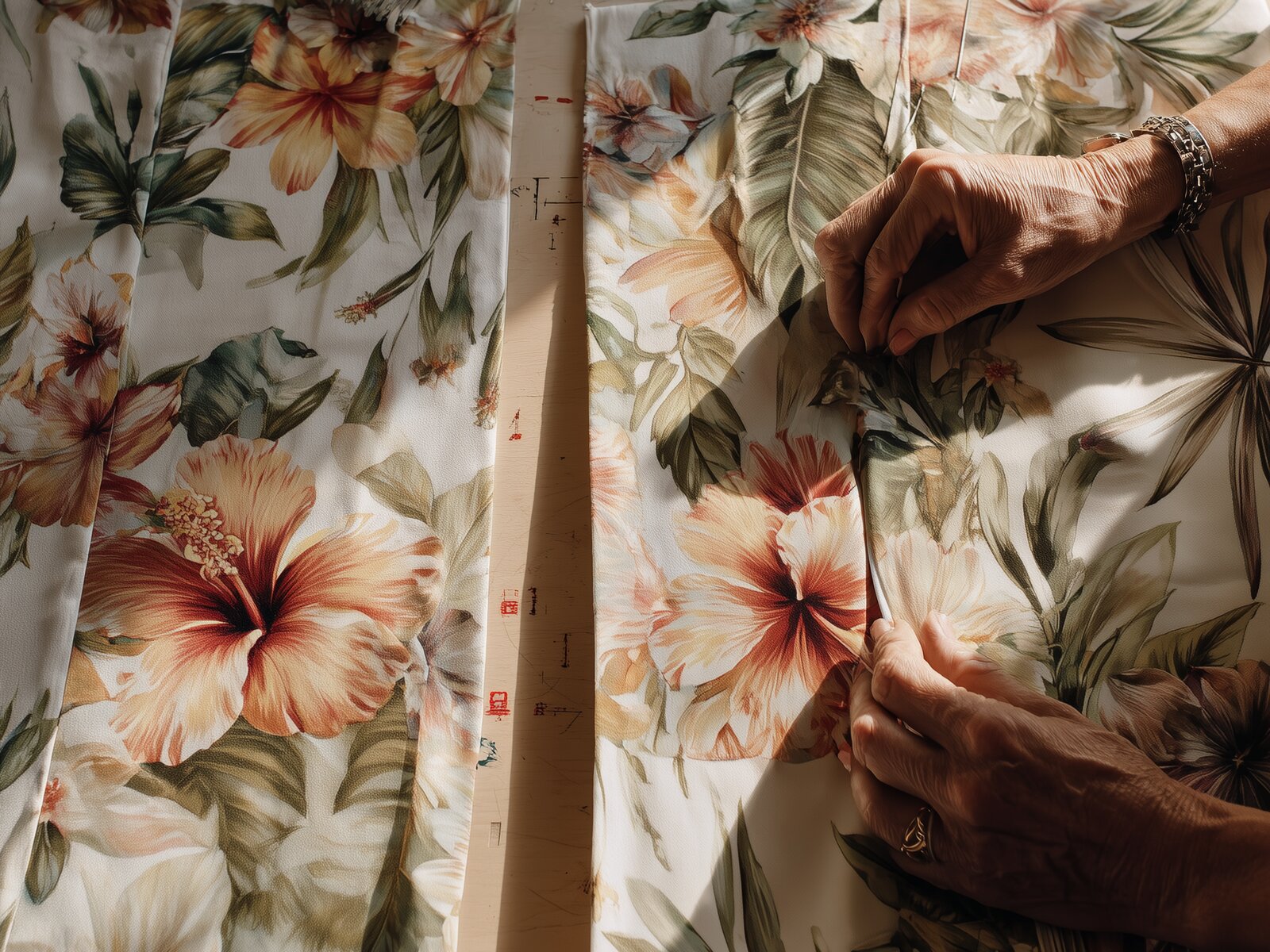
If you've ever worn a printed garment where the pattern breaks at the seam — where a stripe jogs sideways or a flower is cut in half — you know the feeling. Something is off. You might not name it, but your eye catches it instantly.
Pattern matching is the art of aligning a fabric's print across every seam so the design flows unbroken around your body. It requires cutting each piece with painstaking attention to where the print falls, rotating and shifting until the motifs line up perfectly across the join.
This costs fabric. Sometimes a lot of it. A print-matched garment can use 20–30% more material than one where the print is cut without regard. That waste is the price of something that looks intentional, considered, right.
Structure
The Invisible Architecture of Grain
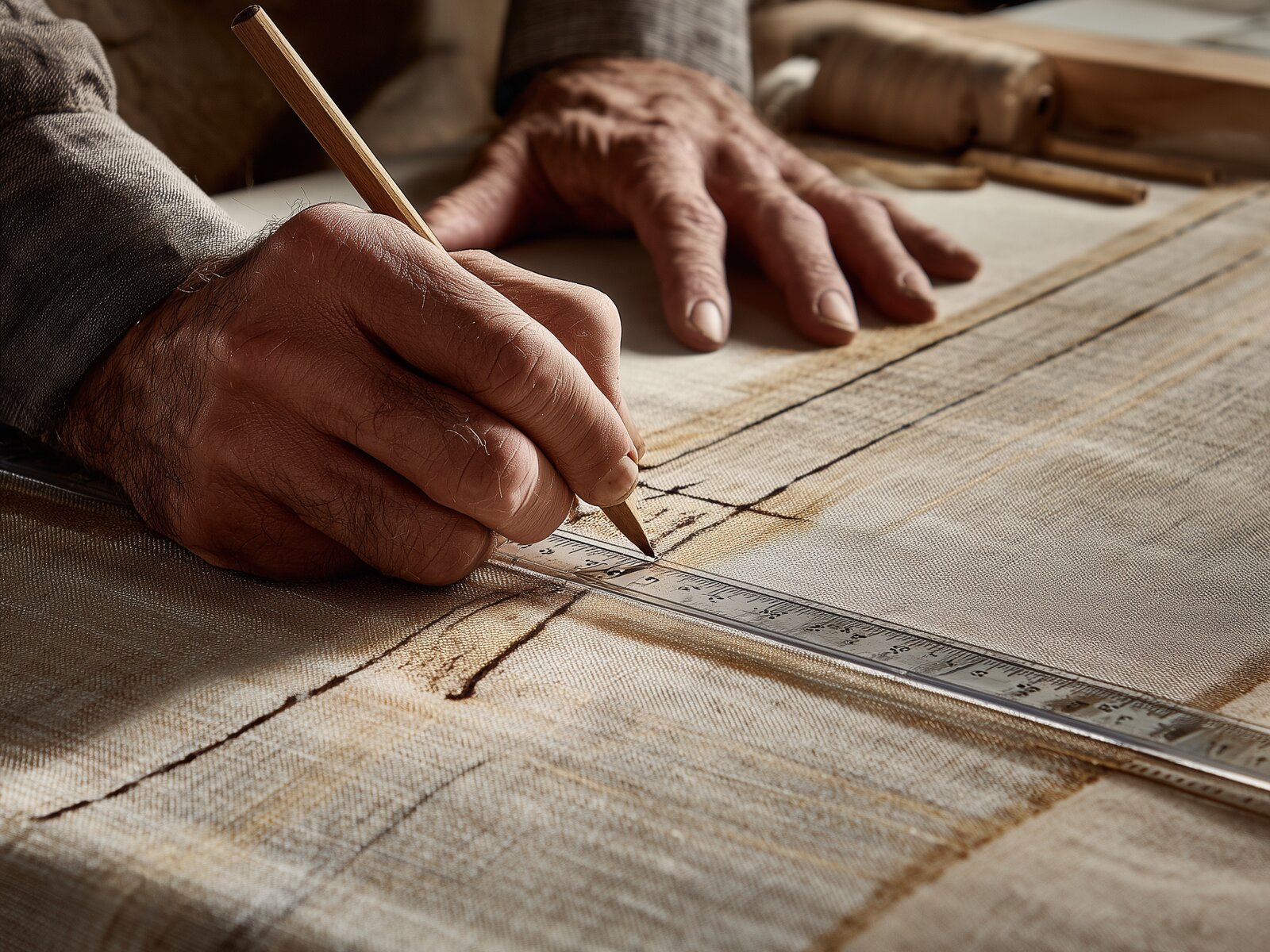
Every woven fabric has a grain — the direction of the threads. Cut along the grain, the fabric hangs straight and stable. Cut against it, and the garment twists on your body over time. Cut on the bias — diagonally — and you get the beautiful fluid drape of a 1930s evening gown.
Grain direction is one of the first things a patternmaker learns and one of the last things they master. Each pattern piece has a grain line marked on it, and the cutter aligns this precisely with the fabric's weave before cutting. Get it wrong by even a few degrees, and one side of your garment will hang differently from the other.
This is invisible craftsmanship. You'll never see a grain line on a finished garment. But you'll feel it every time something drapes exactly the way it should.
Construction
What You Never See
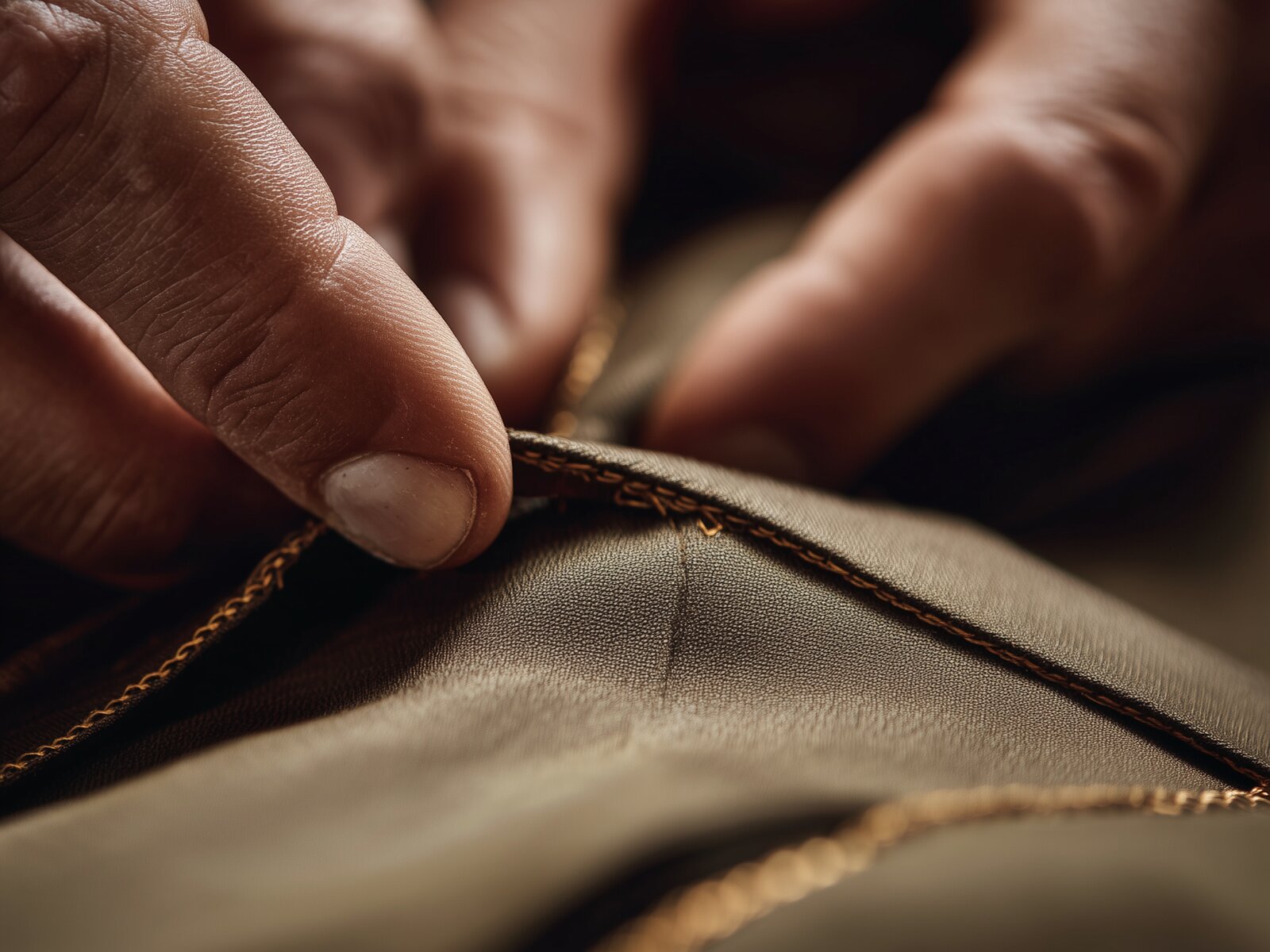
Turn a well-made garment inside out. The seams are finished — no raw edges, no fraying threads. A French seam encases the raw edge inside itself, creating a clean finish on both sides. A flat-felled seam lies smooth against skin with no ridge to irritate. A cover stitch stretches with the fabric instead of fighting it.
In swimwear and lingerie, construction is everything. These are garments worn close to the body with no forgiveness for rough seams or bulky finishes. The inside of the garment should feel as considered as the outside, because it's the side that touches you.
Fit
Sized to You, Not to a Mannequin
Mass-produced clothing is graded from a single sample size — usually a US 8 — scaled up and down by fixed rules. A size 14 is not a size 8 made bigger. Bodies don't scale linearly. Bust-to-waist ratios change. Torso lengths vary. Rise depths are personal.
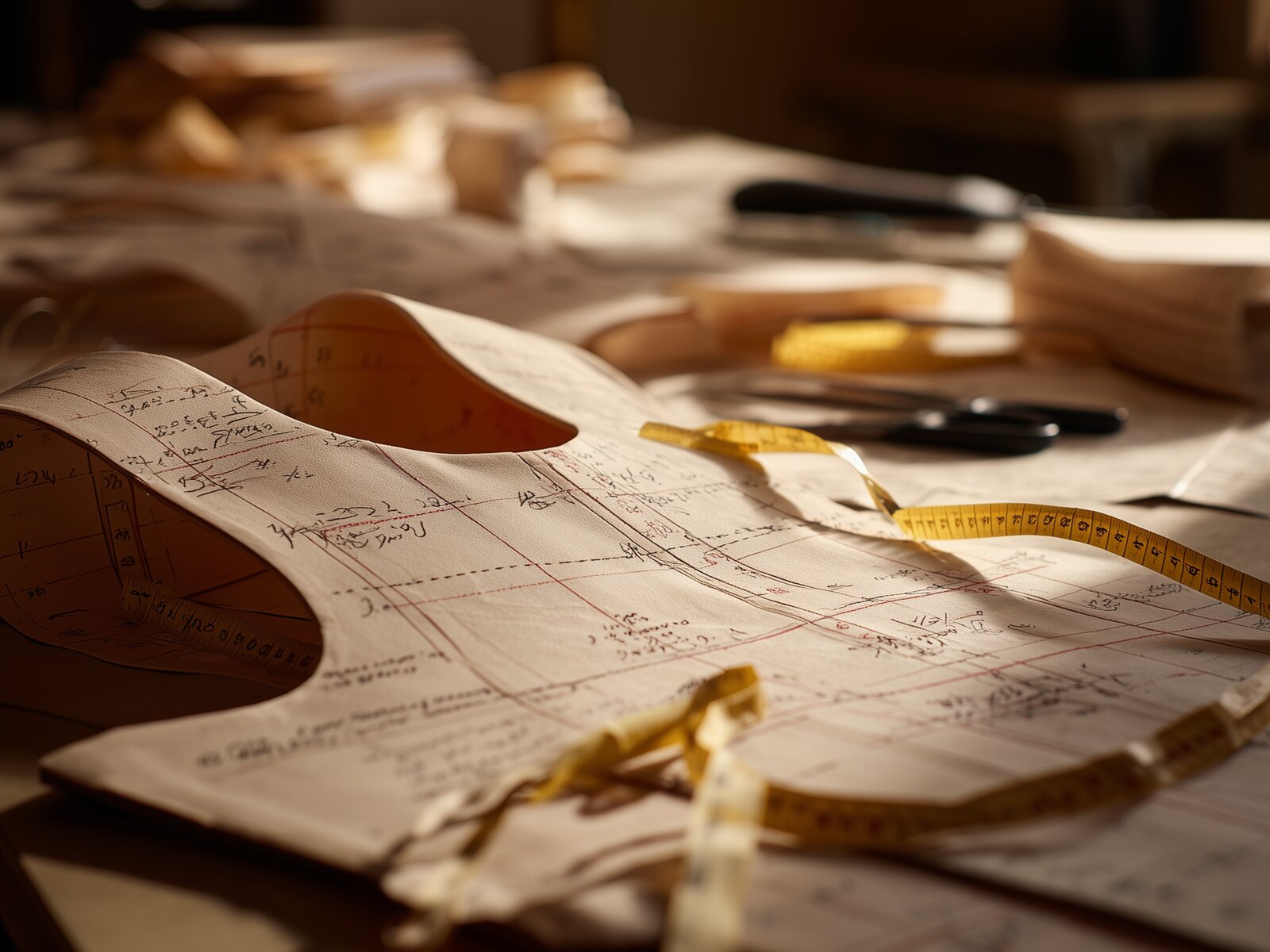
Our parametric patterns don't grade. They compute. Every measurement you provide feeds into construction formulas that produce geometry specific to your body. The dart depth is calculated from your bust and underbust difference. The side seam curves through your waist-to-hip proportion. The rise follows your crotch length.
The result is a garment that doesn't just fit your size — it fits you.
The Makers
Years of Hands, Hours of Care
Behind every garment is a person who chose this craft. Who spent years learning to read fabric by touch, to guide it through a machine at the exact right tension, to press a seam so it lies flat and invisible. The sewing machine is a tool. The skill is in the hands.
Our designers aren't factories. They're makers — people who care about what they produce because their name is on it. When you wear something from Modiste, you're wearing someone's best work.
Ready to Experience the Difference?
Every piece is made with this level of care. Browse our collection, enter your measurements, and receive something made just for you.